
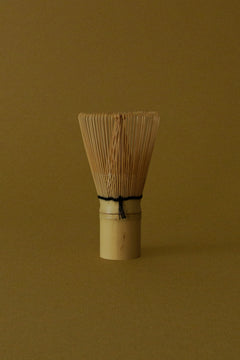
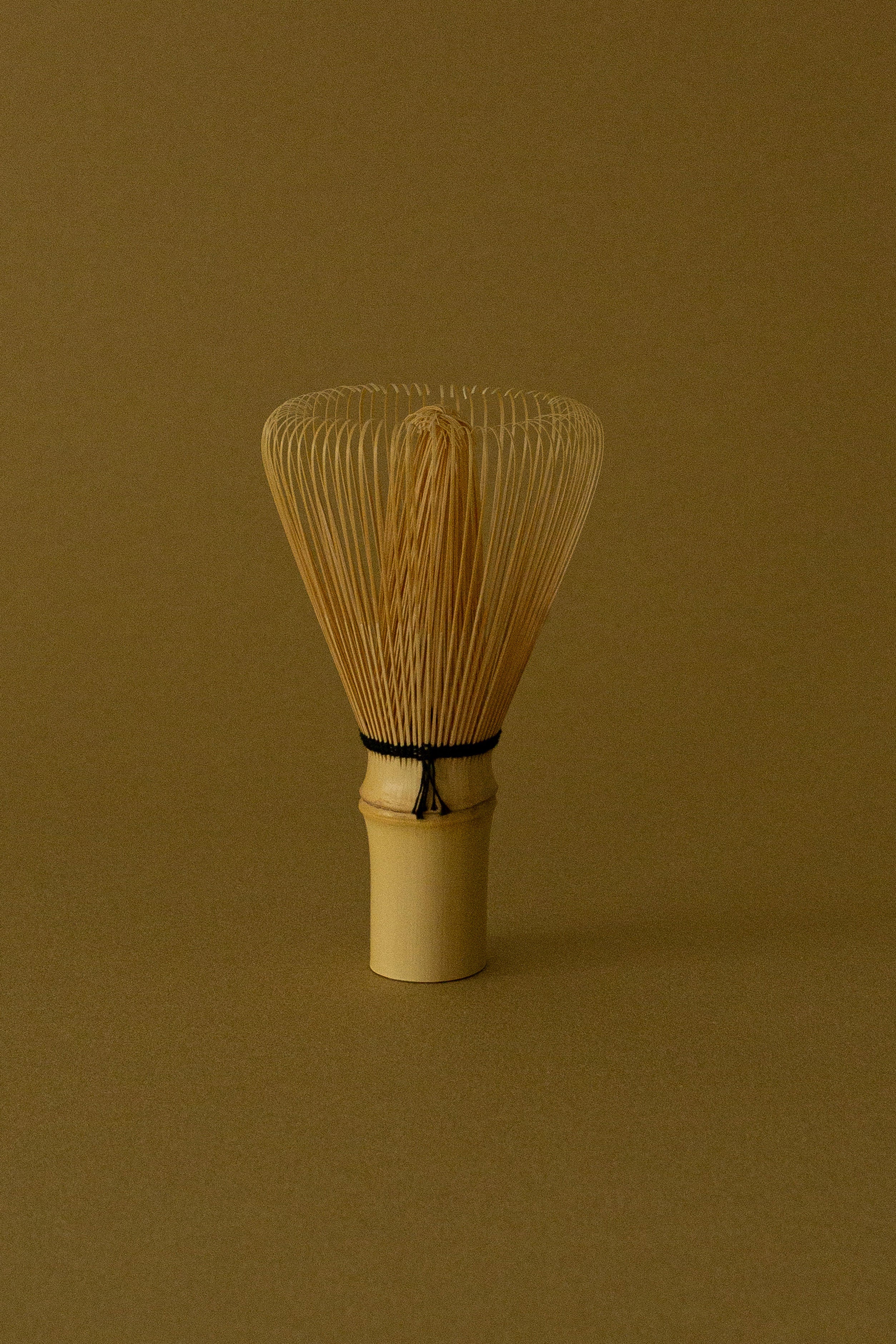



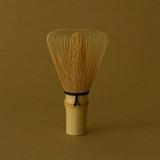

Suikaen Takayama Chasen 100 — {白竹 white bamboo }
VAT included, shipping is calculated at checkout.
Free shipping: NL, BE €50+
Handmade in Japan
One-of-a-kind accessories
- Description
- Chasen Choosing Guide
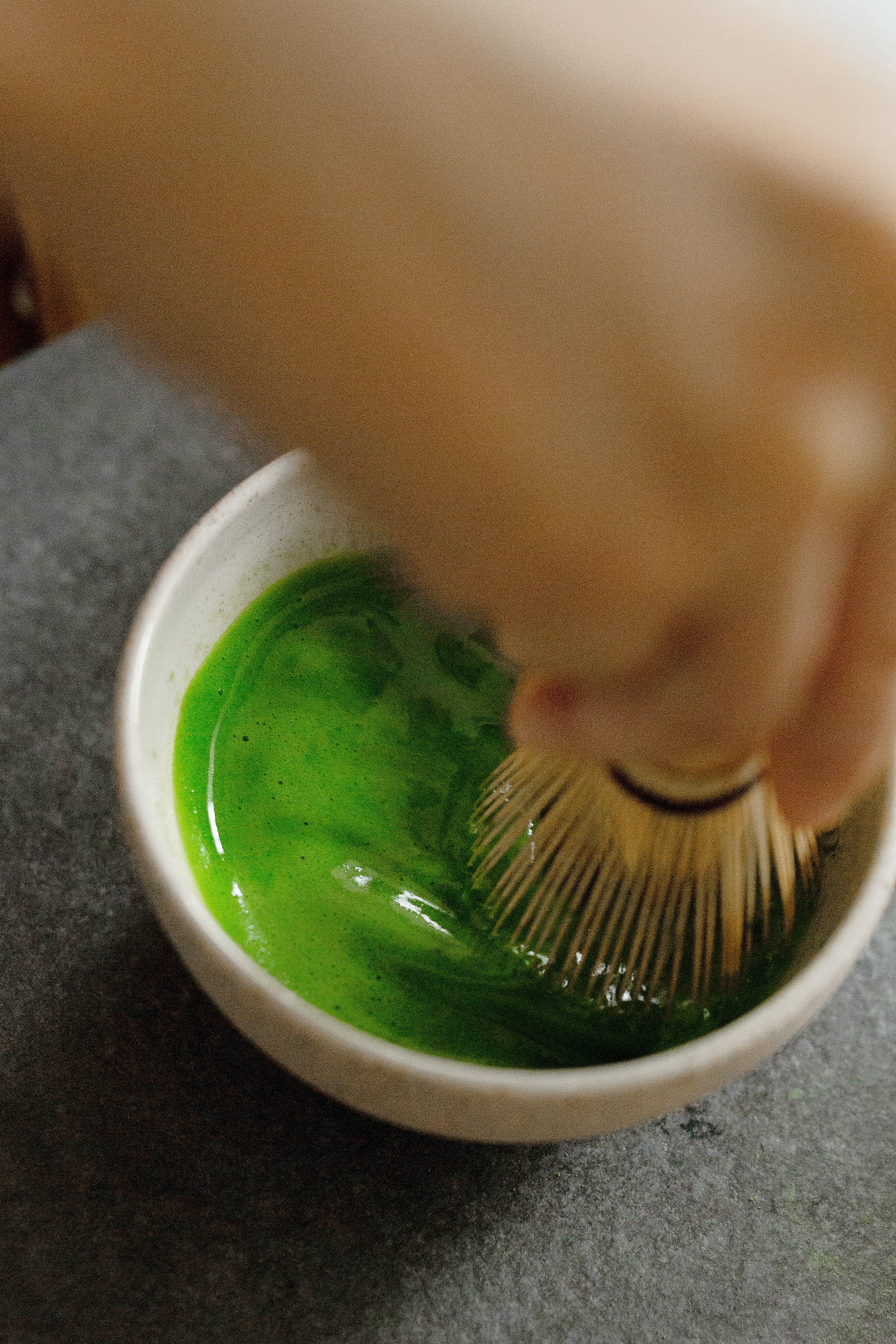
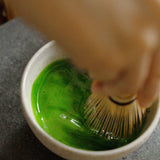
Chasen is a traditional bamboo whisk and an essential tool for whisking matcha with water to create a smooth, delicious bowl. The craft of chasen-making originated around 530 years ago in Takayama, Nara, where the whisk’s familiar shape was first established. Its form has remained largely unchanged thanks to generations of dedicated craftspeople. Today, while chasens are made both in Japan and abroad, Takayama chasens continue to represent the original tradition, handcrafted in the place where the craft was born.
Japan’s Traditional Craft 伝統工芸品
Our Takayama chasens are made by the renowned Tanimura family of Suikaen (翠華園) — one of the most respected chasen-making families in Japan. These chasens are not simply tea tools; they embody centuries of artistry and represent the living history of Japanese tea culture.
The Bamboo: From Mountain to Masterpiece
The meticulous process begins in the mountains, where young bamboo shoots first appear. Suikaen craftspeople carefully monitor each shoot as it grows. After around a year, the bamboo stops increasing in height and begins to harden. Suikaen typically harvests bamboo when it reaches about three years old — the ideal age for chasen-making.
After harvesting, the bamboo is dried outdoors through Takayama’s winter for two months, then stored indoors for a further two years. During this time, any pieces that warp or crack are removed. What remains is bamboo of exceptional strength, stability and natural sheen — the hallmark of Takayama quality.
An Inherited Craft: 一子相伝・門外不出
Traditionally, the skills of chasen-making were passed down from parent to child, never shared outside the family. There were once more than fifty such families in Takayama, but today only sixteen remain. A single craftsman can complete a maximum of five chasens per day, which is part of what makes authentic Takayama chasens so rare, even within Japan.
Our Visit to Suikaen
We had the honour of visiting the Tanimura family in 2024, and we were deeply moved by their history, devotion and sincerity. Their respect for their craft and their determination to carry it into the future were profoundly inspiring. What struck us most was their warmth — every person we met was kind, generous and full of heart.
One example of this spirit is their creation of chasens with colourful strings and charms. The idea emerged during the COVID era, and although it initially challenged tradition, the craftspeople embraced it as a way to reach younger and wider generations and keep the craft alive. We love this story and their courage. Our Takayama chasens are also hand-tied in our MATSU-CHA brand colours, rather than the traditional black.
A Tool with 精神 (Spirit)
The quality of a Takayama chasen is undeniable: lightweight, durable and wonderfully supple, shaped by the hands of true masters. But these chasens also carry something more — a sense of spirit and intention from the people who make them.
If you are fortunate enough to welcome one of these special chasens into your life, we hope it deepens your appreciation for the story, tradition and craftsmanship of Japanese tea culture.
How to Care
Delivery
Free shipping over €50 for our NL customers, €75 or €100 for rest of the EU.
Orders will be despatched within 1-3 business days.
Speciality Matcha
Featuring exclusive blends to Single Origins from award-winning farmers. Elevate your matcha experience with us.

Hōjicha Collection
Stunning aromatic roasted green tea. Low in caffeine and sustainable.